Chapter 10: Prohibitory signs
Segnali di divieto
Chapter 10 of the official list (Segnali di divieto) has 497 true-or-false questions. Here are 12 of them in Italian, with the English translation and the answer.
Practise all 497 questions of this chapter (after unlocking)Start free · launch price €9.90 once (€14.90 from 1 January 2027)
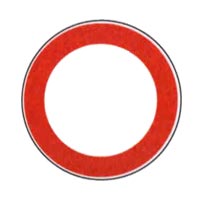
Il segnale raffigurato vieta la circolazione nei due sensi
The sign shown prohibits traffic in both directions
V · True
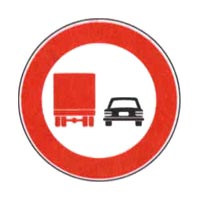
Il segnale raffigurato consente ad un autocarro di massa complessiva superiore a 3,5 tonnellate di sorpassare un motociclo
The sign shown permits a lorry with a total mass exceeding 3.5 tonnes to overtake a motorcycle
F · False
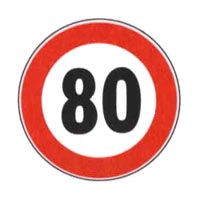
Il segnale raffigurato è un segnale di divieto
The sign shown is a prohibitory sign
V · True
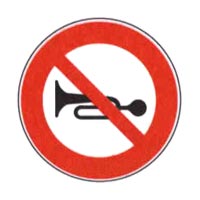
Il segnale raffigurato consente l'uso del clacson per richiamare l'attenzione in qualsiasi circostanza
The sign shown permits the use of the horn to attract attention in any circumstances
F · False
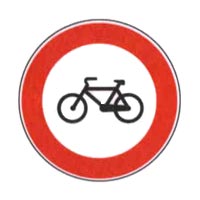
Il segnale raffigurato vieta il transito alle biciclette
The sign shown prohibits the transit of bicycles
V · True
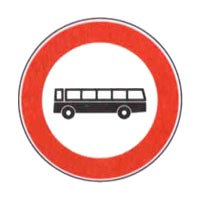
Il segnale raffigurato vieta il transito anche agli autobus di massa a pieno carico inferiore a 3,5 tonnellate
The sign shown also prohibits the transit of buses with a fully laden mass of less than 3.5 tonnes
V · True
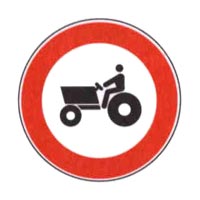
In presenza del segnale raffigurato è consentito il transito ai motocicli
With the sign shown, the transit of motorcycles is permitted
V · True
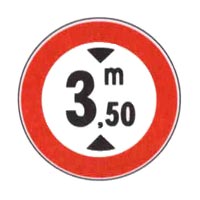
Il segnale raffigurato può trovarsi in un punto in cui la strada passa sotto un ponte
The sign shown may be found at a point where the road passes under a bridge
V · True
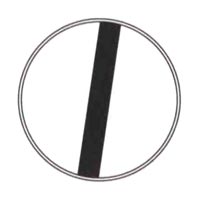
Il segnale raffigurato è un segnale di via libera
The sign shown is an all-clear sign
V · True
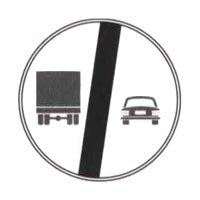
Il segnale raffigurato indica la fine del divieto di sorpasso per autobus di massa a pieno carico superiore a 3,5 tonnellate
The sign shown indicates the end of the overtaking prohibition for buses with a fully laden mass exceeding 3.5 tonnes
F · False
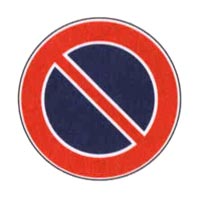
Il segnale raffigurato, posto nei centri abitati, vieta, di norma, la sosta dalle ore 8.00 alle 20.00
The sign shown, placed in built-up areas, as a rule prohibits parking from 8.00 to 20.00
V · True
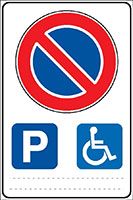
Il segnale raffigurato consente la sosta agli scuolabus
The sign shown permits parking for school buses
F · False