Chapter 12: Traffic rules; position on the carriageway; changing lanes and turning; funerals, processions and military convoys; behaviour at junctions; right-of-way rules; duties towards police and emergency vehicles; risks of different vehicle types and drivers' field of view
Norme sulla circol. dei veicoli; pos. dei veicoli sulla carreggiata; cambio di direz. di corsia (svolta); comp. in presenza di funerali, cortei, convogli militari; comp. agli incroci; norme di prec.; obblighi verso veicoli di Polizia e di emergenza; rischi legati a manovra e a guida dei diversi tipi di veicolo e relativo campo visivo del cond.
Chapter 12 of the official list (Norme sulla circol. dei veicoli; pos. dei veicoli sulla carreggiata; cambio di direz. di corsia (svolta); comp. in presenza di funerali, cortei, convogli militari; comp. agli incroci; norme di prec.; obblighi verso veicoli di Polizia e di emergenza; rischi legati a manovra e a guida dei diversi tipi di veicolo e relativo campo visivo del cond.) has 374 true-or-false questions. Here are 12 of them in Italian, with the English translation and the answer.
Practise all 374 questions of this chapter (after unlocking)Start free · launch price €9.90 once (€14.90 from 1 January 2027)
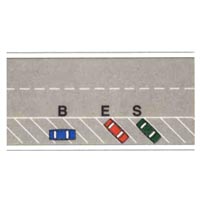
Il veicolo S, muovendosi in retromarcia per immettersi nella circolazione, deve dare la precedenza ai veicoli provenienti sia da destra che da sinistra
Vehicle S, moving in reverse to join the traffic, must give way to vehicles coming from both the right and the left
V · True
Chi guida un veicolo deve tenere in funzione gli abbaglianti di giorno anche in città
Anyone driving a vehicle must keep the main-beam headlights on during the day, even in town
F · False
Quando, giunti in prossimità di un incrocio, ci accorgiamo di aver sbagliato la corsia di preselezione non ci dobbiamo arrestare bruscamente, per evitare tamponamenti e confusione nella circolazione
When, on approaching a junction, we realise we are in the wrong lane for our direction, we must not stop suddenly, to avoid rear-end collisions and confusion in the traffic
V · True
Quando ad un incrocio urbano, al segnale di via libera, il veicolo che precede tarda a riprendere la marcia, è opportuno, se c'è bisogno ed è possibile farlo senza pericolo, prestare aiuto all'automobilista rimasto fermo
When, at an urban junction, the vehicle in front is slow to move off when the go signal is given, it is advisable, if necessary and if it can be done without danger, to help the motorist who has stopped
V · True
Per effettuare la svolta a destra bisogna segnalare in anticipo la manovra da compiere, azionando l'indicatore di direzione
To turn right, you must signal the manoeuvre in advance by operating the indicator
V · True
In una carreggiata a doppio senso di circolazione per svoltare a sinistra occorre suonare il clacson, per attraversare con maggior sicurezza l'incrocio
On a two-way carriageway, to turn left it is necessary to sound the horn, in order to cross the junction more safely
F · False
Nelle strade urbane è consentito, quando si vuole svoltare, circolare a cavallo delle strisce di corsia
On urban roads, when you want to turn, it is permitted to drive straddling the lane lines
F · False
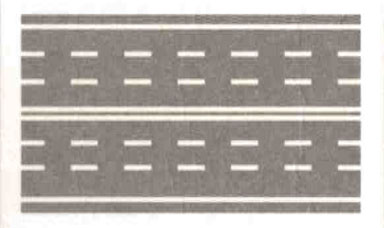
E' obbligatorio viaggiare per file parallele sulle carreggiate a tre corsie per senso di marcia, come quella in figura
It is compulsory to travel in parallel rows on carriageways with three lanes in each direction, like the one in the figure
F · False
In vicinanza o in corrispondenza degli incroci extraurbani non è consentito superare la velocità di 60 km/h
Near or at extra-urban junctions it is not permitted to exceed a speed of 60 km/h
F · False
Nelle strade a doppio senso di circolazione non è consentito effettuare l'inversione del senso di marcia in vicinanza o in corrispondenza di curve
On roads with two-way traffic it is not permitted to make a U-turn near bends or on them
V · True
Il conducente che intende immettersi nel flusso della circolazione deve tenere conto della posizione, distanza, direzione degli altri utenti della strada
A driver intending to join the flow of traffic must take into account the position, distance and direction of other road users
V · True
La posizione antiriflesso dello specchio retrovisore centrale di un autoveicolo serve a ridurre il fastidio agli occhi causato dai proiettori accesi dei veicoli che seguono
The anti-glare position of the central rear-view mirror of a motor vehicle serves to reduce the discomfort to the eyes caused by the headlights of following vehicles
V · True